Monday, March 31, 2008

Chinese Lessons

The second book in my study of China prior to the trip is CHINESE LESSONS by John Pomfret.

From the jacket cover....

CHINESE LESSONS: Five Classmates, and the Story of the New China is Washington Post reporter John Pomfret’s evocative recounting of the lives of his former classmates in the Nanjing University History Class of 1982. As one of the first American students to live and study with Chinese after the revolution, Pomfret saw the country as few Americans had. Leaving China in 1982, Pomfret returned for the Tiananmen Square protests and the crackdown of June 4, 1989. Expelled by the Chinese government at that point, he again returned to live from 1998-2005 as the Post's bureau chief in Beijing.

Pomfret uses the lives of his classmates as a vehicle for telling China's story, one of the most tumultuous the modern world has ever known. His classmates came from villages and cities; some were Red Guards; others were beaten by Red Guards; some siblings starved to death during the calamitous Great Leap Foward...

This book is almost too much to take at times. The unbelievable cruelty that was put upon some of these people causes me to stop and actually catch my breath. It truly is amazing what people, "everyday" people can endure.

Whereas Oracle Bones was something that dealt with the recent modern history of China (1990s-2000s), this book...although it does jump forward to the present, spends most of the time in the 1950s, 60s, and 70s, opening up the Cultural Revolution of Moa and the incredible cruelty and many times stupidity of his reign, from an "insider's" view.

Worth the read!

You can also catch John Pomfret here on

Sunday, March 30, 2008

Qing, Dragons, Red Lacquer

Yesterday was our group's second meeting in Memphis. We met at the Belz Museum of Asian and Judaic Art. This isn't a very large museum, but it does have a wonderful collection of Chinese artifacts. There are many amazing pieces of jade and ivory carvings. Check out the mystery balls if you go, or the jade chains that are long chains made of jade that are cut from ONE piece of jade.
It really is amazing.

We learned some interesting facts about the imperial world of the Qing dynasties and about Chinese imperial dragons. I'll mention three things here that stood out.

First: The Qing dynasty is also known as the Manchurian Dynasty. It was the last ruling dynasty of China prior to the founding of The People's Republic of China. The Manchurian were horsemen that were not ethnic Han Chinese, so there are some differences in their rule.
One of these can be seen in the design of the imperial robes. If you look at the robes prior to the Qing (pronounced Ching) dynasty, they don't have cuffs on the robes. They are either flared out and large or they are just straight sleeves, like the image below.

The Qing/Manchurians were horsemen from the plains, and greatly loved and depended on the horse. It is thought that the cuffs on their robes, such as the previous image to the top left, were formed to look like the horse's hoof.

Also notice that both of these robes are yellow. That is the imperial color. You will also notice they have the imperial dragon on them(click the images for a more detailed view of the dragon). The imperial dragon is different from the other dragons, because he has 5 claws. Other Chinese nobles would have dragons with 2 or 3 or 4 claws, but only the emperor would have the five clawed dragon.

Below is the Qing Imperial Dragon. Notice the yellow background and the five claws.
Another interesting thing about the Chinese Imperial Dragon, is that he is made up of nine different parts. He is made from nine different animals. Can you find the nine different animals represented in the dragon?

Another interesting artifact is the red lacquer they use to create objects, anything from a chair to a writing set seen here. They take wood and build the base of the object from the wood. Then the red lacquer is applied many many times until it is thick enough to start carving into the shapes wanted in and on the object(again click on the images for more detail). It is really amazing when you think about the TIME involved in all of these artistic processes. Something that in today's world of instant everything seems virtually impossible, or something that would take at least one lifetime to create.

Friday, March 28, 2008

Chinese Zodiac & Chinese New Year

The Chinese animal signs are a 12-year cycle used for dating the years. They represent a cyclical concept of time, rather than the Western linear concept of time. The Chinese Lunar Calendar is based on the cycles of the moon, and is constructed in a different fashion than the Western solar calendar. In the Chinese calendar, the beginning of the year falls somewhere between late January and early February. The Chinese have adopted the Western calendar since 1911, but the lunar calendar is still used for festive occasions such as the Chinese New Year. Many Chinese calendars will print both the solar dates and the Chinese lunar dates. (from the site http://www.c-c-c.org/chineseculture/zodiac/zodiac.html)


Chinese New Year


Tuesday, March 25, 2008

Breakfast In China

One of the main things that people mention when I tell them that I will be in China, is the food. There are those who have an adventurous spirit about trying new things in regard to food...there are the others that are a bit reserved about the cultural "divide" when it comes to the differences in diet.

I must admit if I have any reservations about China, there are two that stand out. One would be about pollution and the other about food. So I have been doing a bit of research on both. I believe that mentally preparing yourself for anything that might be a challenge is 95% of tackling the "problem." So research and knowledge ahead of time helps with this mental preparation.

The following link is one of those sites that is helping in this mental prep.

BREAKFAST in CHINA (and other meals)

Luckily I already have down the art of actually EATING (with chopsticks)...but for those who don't this video might be of some help.

How To Use Chopsticks


And for the cooks out there...
How To Cook Chinese

Monday, March 24, 2008

Peter Hessler


In his new book, Oracle Bones: A Journey between China's Past and Present, Hessler, who has lived in China for the past nine years and is the Beijing correspondent for The New Yorker, looks at the country through a kaleidoscopic lens of history, archeology, language, and contemporary culture.The title Oracle Bones refers to the earliest known writing in East Asia, inscriptions from the Shang dynasty more than three thousand years ago. As Hessler follows contemporary events, he returns again and again to these fragile first records of history in China, exploring the tension between a nation's troubled past and its determination to look to the future. His narrative follows individuals who make their way through a changing China. By following these stories, and interweaving them with portraits of archeology and history, Hessler gives the reader a new perspective on the dramatic transformation of today's China.... (from WGBH public television in Boston)

FOR VIDEO: CLICK HERE

This is a link to a speech Hessler gave in Boston on
Tuesday, May 16, 2006 at
The Boston Athenaeum
You may also read TIME's Asian Journey that Hessler wrote about his journey back to Fuling, the setting of his first book RIVER TOWN.

Sunday, March 23, 2008

Pinyin

Chinese writing dates back at least 3,500 years. Chinese writing is a combination of phonemes and pictographs. The largest Chinese dictionary contains more than 50,000 characters, but only about four thousand characters are needed for everyday use.
There are many dialects in the Chinese language. A dialect is a form of language used only in certain places or among certain groups. Chinese people may not understand each other when they speak, but all Chinese people can read and understand the same written characters.
In 1958, China adopted the Pinyin system of phonetic writing. The Pinyin system uses Roman letters more familiar to Americans. Since then, Americans have been encouraged to change their pronunciation and spelling of Chinese names. Most Americans referred to the Chinese capital as "Peking." (pe-KING) We now know it as "Beijing." (bay-ZHING)

This site is yet another great practice tool for Pinyin. I have found it very interesting how many different sites there are like this for English speaking people. I think that itself is very telling.

Wednesday, March 19, 2008

Mandarin Pronunciation Guide

This site is very simple to use, and it will look up phrases for you and pronounce them.
How To Pronounce Basic Mandarin Chinese


Pronunciation Guide:

There are four tones, which are indicated by numbers or directional lines:

1 (flat), 2 (rising), 3 (dipping then rising), and 4 (falling).

"Q" is pronounced "ch"
"Qu" is pronounced "chree"
"X" is pronounced "sh"
"Zh" is pronounced "dj"
"Sh" is pronounced "ss" with your tongue curled toward the roof of your mouth
"I" is pronounced "ee"
"ao" is pronounced "ow"
"uo" is pronounced "aw"
"ie" is pronounced "eeyeh"
"ian" is pronounced "eeyen"
"ai" is pronounced like the letter "I"
"ei" is pronounced like the letter "a"
Beijingers end almost everything with "er" or "ar"

PLEASANTRIES:

Nihao or Nihao ma: "Hello" or "How are you?" Universal greeting.
Xie Xie: Thank you
Fu Wu Ren: Server. You might also hear "Xiao Jie," meaning waitress.
Man Zhou: Literally: "Walk slowly." Said in parting, i.e. safe travels.
Shi Fu: Literally: "Teacher." Used colloquially to mean "sir."
Zai Jian: Goodbye


SHOPPING:

Duo shao qian?: "How much?" In Beijing,
the regional accent might sound like Duor qian?
Tai gui!:
"Too expensive!" Use for haggling.
Zhe ge: This one
Na ge: That one


DIRECTIONALS:
Zai nar?:
"Where is it?"
Qu nar?:
"Where are you going?"

Dong: East
Xi: West
Nan: South
Bei: North
Zhong: Center
Hai: Body of water
Men: Gate or door, used in a lot of street names
Wai: Without
Nei: Within
Guo: Country
Jing: Capital
Jie: Major avenue
Lu: Street or road
Hutong: Traditional alleyway
Zhan: Station or stop


FOOD:
Xiao chi: Snacks, usually something hearty,
like noodles or dumplings
Fan: Rice
Mian: Noodles
Bing: Pancake or crepe
Bao: Bun

Jiao zhi: Boiled dumplings


Thanks to National Geographic
for the above information in their
BEFORE YOU GO section.

Saturday, March 15, 2008

Chinese Language

One of the most difficult, and yet most interesting parts of this trip will be learning some of the Chinese language (Mandarin). We already started learning some phrases at our first meeting. I find reading them correctly when they are written phonetically for me in English...is not that hard. Trying to read ANYTHING in Chinese script...is another thing all together. Below is my first lesson.

THANK YOU=Xie Xie Ni
(or just Xie Xie)


The X sound tends to sound like the SH sound in English, but actually has more of a hard sound. It isn't the SH as in SHe....it is more the sound SH and then follow through with kind of a buzz sound. Sort of like an electric razor sound that follows...ha ha.
(Just watch the video below)

Ni is like (Knee)you can use it or not use the Ni for THANK YOU.
So Xie Xie Ni or just Xie Xie (I think that is the difference between THANK YOU and THANKS) The idea is the same.

Friday, March 14, 2008

Money & China

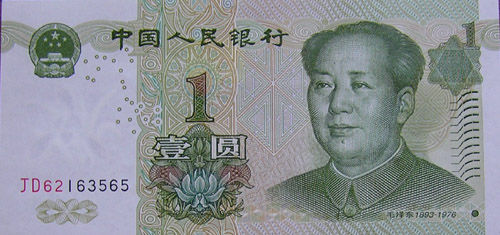
Well, China is one place in the world where the dollar has a better value than in places like Europe (it is going to hurt this summer going to London...with the pound being 2/1 with the dollar....and the Euro in Paris 1.5/1 dollar.)
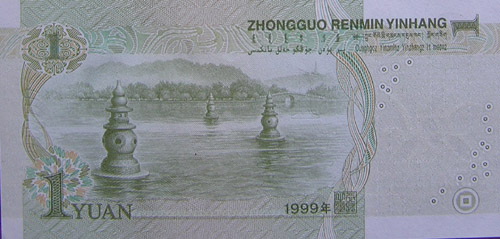
But in China the YUAN or RENMINBI converts to about 7/1 dollar. Thank goodness.

Time Difference

The time difference between Beijing and Shanghai, China & Nashville, TN (CST) is 13 hours. So if it is 12 midnight on Thursday in Nashville, it will be 1:00pm Friday in Beijing. They are 13 hours ahead of Nashville. The WORLD CLOCK & DATE page is useful for converting time across the globe.